‹ Site index · Museum home · 🌐 Lingua / Language

Motion by Roberto Quaglia for a week of Romanian Culture in Genoa

Motion and floor intervention
by Roberto Quaglia


The motion that follows was prepared by Roberto Quaglia, City Councillor of the city of Genoa, in November '95. It obtained the signature of almost all the council groups present in the Council of the Municipality of Genoa, and went to discussion on 22 January 1996. The motion calls upon the Mayor of Genoa and the Council Executive to organise in Genoa a cultural event centred on contemporary Romanian culture. On this page, the motion is preceded by the text of Roberto Quaglia's intervention


During the discussion on the floor, the motion had to undergo the suppression of the first three preamble paragraphs (in which a few well-known problems of Genoa are set down in black and white, problems that very few in Genoa recognise or admit to recognising). It also slightly suffered a couple of amendments, which leave open the possibility, for the Council Executive, of possibly not implementing what the motion proposes, should they fail to do so (incredible but true! take it or leave it...). Finally, it was passed unanimously....


Intervention by Roberto Quaglia (Lista Pannella)


Mr President, Mr Mayor, colleagues...

WHEN WE SPEAK OF EUROPE, WE DO NOT ALL MEAN THE SAME THING

When we speak of Europe, we do not all mean the same thing. They taught us Europe as children, when we went to school, listing for us the names of the countries that make it up, the area in square metres of those countries, the names of the rivers that flow through them, the kilometres covered by those rivers, the names of a few mountain ranges and possibly a list of useful minerals they contain. So many names, so many numbers, all of it abstract.
And yet we do know what Europe is, even if when we speak of it we do not all mean the same thing. We know what Europe is because to the first abstract, superficial and barely meaningful notions of early schooling we have over time added layer upon layer of further understanding. But that understanding has not developed evenly. We take a trip to Germany, and we deepen our knowledge of Germany. We watch a French film, and we deepen our knowledge of France. We buy a Swatch, and we deepen our knowledge of Switzerland. We read a newspaper, and we deepen our knowledge of the European countries about which that newspaper reports news. And above all, we watch television, and we deepen our knowledge of those European countries of which we see images and hear news on the screen.
And so it happens that we know far more about distant countries on the other side of the globe than we know about many European countries. We know everything about the streets of San Francisco and the skyscrapers of New York, we distinguish to perfection the imperceptible organoleptic variations of those four or five different types of hamburger with the unique flavour of cheap mayonnaise that constitute the culinary art of a great country across the ocean, we know perfectly well that in a place where atomic bombs went off yesterday there are today some fine things called Sony which differ from others called Panasonic, not to be confused with Kawasaki, Mitsubishi and Karaoke.
And so it happens that about many European countries we could not hold forth for more than a minute. Does even a single name of a Polish painter come to the mind of any of you? Or the name of an Albanian poet? Or of a Bulgarian musician? A Hungarian writer? A Romanian composer?
When we speak of Europe, we do not all mean the same thing. A part of Europe exists in the minds of many of us as an abstract spectre. We fill our mouths with Europe, and if we analyse the mouthful, we discover that for the most part we were chewing air. By now we know the names of all the neighbourhoods of New York, even though we have never been there. But can we all list, of the countries of Eastern Europe, even just two names of cities for each of them? I have the strongest doubts.
It is useless to delude ourselves. The future of Europe passes through Europe. That which is not known, IS NOT! The future of Europe, if there is to be one — and I believe there will be — passes through the mutual knowledge of the countries that make it up.

AND THE ROMANIAN PEOPLE

Among all the countries about which we know almost nothing, there is one with respect to which our ignorance becomes particularly jarring, the people of that country being strongly related to us. I am speaking of Romania, whose very name makes evident reference to our Italian capital.
The Romanian people is a Latin people closely akin to our own. Its traditions, habits and customs, its language, its moral values, have much in common with ours, and so do its physical features and all those expressive categories that make up so-called non-verbal communication.
The Romanian people is a Latin people as much as, and more than, our own. When the Roman Empire fell in Italy, it continued for a long time still in the country that today is Romania.
It surprises any Italian who has had the chance to visit Romania, the very great affection and esteem that Romanians feel towards the Italian people, history and culture. They fondly regard us as their rich cousins, and it is painful in this regard to be aware that almost all Italians not only do not think of the Romanian people as our poor cousins, but do not even consider the Romanian people as a people related to ours. Often the average Italian has never even entertained the thought that the Romanian people exists, except in a tangential and distorted way, in association with international football events, with television spectacle (and the thought runs to the images of the Romanian revolution of '89), or with crime news. The very fact that we are now, in this chamber, speaking of the Romanian people will induce in some a sense of "strangeness", of the kind "what have the Romanians to do with us?", a thought that would not have arisen if we had instead dealt with our cultural relations with the French people or the Spanish people, peoples no closer to ours, in origin and affection, than the Romanian one, whether we know it or not.
You know, you here present, you here absent... do our citizens know that for some years now, in the homes of Romanian cities, Italian television is habitually watched, just as it is here? The cities are by now wired with cable TV that broadcasts, from the satellite, programmes from all over Europe, and the Italian networks RAI and Fininvest are the ones preferred by the Romanian people. They watch all our channels, or almost. It is by now normal, among the young, among adolescents, to learn Italian by watching Italian television programmes. And do you know the implications of such a phenomenon? Television, as is well known, is our great dispenser of fashions, social rules, beliefs and values. As Popper pointed out shortly before his death, if a collapse of values afflicts the new generations today, it is because that collapse of values is instilled precisely by television. As regards our subject today, it is evident, to anyone who pauses to think about it, that young Romanians are today absorbing, from our television in their homes, all our Italian fashions, Italian beliefs, Italian values, contemporary Italian myths. In simple words, day by day they become ever more Italian, since what contributes to forming a people is nothing other than the sharing of language, rules and values. I do not wish here to establish or discuss whether this is a good thing or a bad thing. I only wish to state this reality of the facts, because it concerns us, even if, at first sight, to the most superficial among us, it might seem the opposite.
The penetration of Italian thought into Romania is not an event to be overlooked. But this is not the focal point of my reflections. What dismays and worries, in this colossal phenomenon of communication between two peoples, the Italian and the Romanian, is the one-way nature of the flow of information. The Romanians know ever more about Italy. The Italians continue to know nothing about Romania. Some fool may rejoice at such asymmetry, in the name of a sad flare of sterile nationalist pride. The truth is that the Romanians add, with each passing day, our culture to theirs, while we never add theirs to ours. And ignorance of something, it seems to me, and I hope it seems so to those present too — to the present present, to the present absent, to the absent present, and let us omit the absent absent — ignorance of something, I was saying, can never be a boast or a pride, and is certainly of no use whatsoever.
I am aware that our small efforts will hardly alter the course of events on so vast a scale. Nonetheless we must act, with strength, conscience, will and wisdom, in all the fields in which we perceive that we can bring about an improvement, even if that improvement yields little in terms of electoral returns to those who propose it and those who carry it out. It pays more — alas, and above all, alas for us — to insult whichever immigrant happens to be at hand.
With this motion the mayor and the council executive are called upon to organise in Genoa a broad event on contemporary Romanian culture.

A CULTURAL EVENT TO COMPENSATE FOR THE DISINFORMATION OF THE MEDIA

You see, when a little earlier I maintained that the information reaching us from Romania is nil, I did not express myself with precision. In reality, the mass media provide us now and then with news associated with the existence of Romania and of Romanians. Unfortunately, the selection of information carried out by the mass media is rather peculiar: the actions of Romanians interest the newspapers above all when it is a matter of criminal acts, such as rapes and murders committed by individual drifting criminals in our country, which make news precisely when the criminals are not Italian, and television takes care to give us an idea of Romania only when it is a matter of sending down there, to Transylvania, at the expense of Italian taxpayers, a crew to film and show us live all the tears of the coarse weeping parents of the beautiful lover of the murderers of the so-called "banda della uno bianca".
We cannot call "information" this way, so typical of our modern mass media, of filtering in the negative the news to be given prominence. "Disinformation" would often be a more appropriate label. It is a moral imperative, shaped by the dictates of an enlightened and far-sighted ethics, to act in opposition to this mounting catastrophe of automatic disinformation. The advances of technology today increase the volume of information that can be transmitted. But exponentially there also increases, in this informational magma, the deafening background noise made up of insignificant information, that is, the automatic negative filtering of information I mentioned a moment ago, the fruit of the need to attract at any cost the simplest minds in order to remain in the market.
Getting down to the concrete, we believe that the organisation in Genoa of an event on contemporary Romanian culture would open a chink onto what of beauty a people so close to us as the Romanian one can transmit to us all. A chink that each of us Genoese may then choose, or not, to explore further at our own pleasure.
How many Italians know that the very great Romanian poet Mihail Eminescu, already in the last century, anticipated in his lyric poetry the physical and philosophical intuitions underlying Einstein's theory of relativity?
There is too much, too much that we do not know about a country that is instead learning everything about us. Until 1989, the obstacle to knowledge was a grim tangle of mutual political censorship. After the Romanian revolution, the obstacle to knowledge, on our part, is only an inertia that we must counter, the inertia of a lack of curiosity other than the kind induced by the incessant, homogeneous and homogenising eruption from the screens of our domestic television sets.
Some naive person might argue that Genoa has other priorities, more important problems than that of organising a cultural event, and one about Romania at that, a country in which not even TV series and soap operas are set, a country therefore too unsuited to television to deserve our interest. To such hypothetical naive persons we would reply that in the administration of a city, of a great city, an activity of one kind does not exclude another of a different kind, and that it is precisely because there are different priorities that different departments have been established. If there were objections to this proposal of ours, they would have to be founded exclusively on arguments of a cultural kind. The Department of Culture exists to deal with culture and nothing else.
And if someone should fear that the municipal budget might suffer from the staging of such an event, we reply here and now that such a danger would not exist. You see, it is the case, or rather our history, that in Genoa there is a great company called Ansaldo, which has very close commercial relations with Romania and enormous interests down there, having just built, in Romania, a large power plant, and it appears that it will soon build another, and it is a contract worth hundreds of billions. We are certain that the Municipality will be able to obtain, for this event, important financial support from Ansaldo, thus dispelling this possible objection too.
And so let the staging of this event be given the go-ahead, so that it may lead us as soon as possible to form an idea of the traditions, the science, the art, the cinema and the theatre of contemporary Romanian culture.
And let us thus nourish our wish and dream, that in the near future other similar events may lead us to know more about all those European countries of which we know little, so as to bring us a little closer to that distant goal, on reaching which, when in Europe one spoke of Europe, we would all mean a little more the same thing.

Roberto Quaglia


To the Honourable Mayor
of the Municipality of Genoa


M O T I O N


THE CITY COUNCIL OF GENOA

HAVING ASCERTAINED THAT

- the city of Genoa has shown, within living memory, for historical reasons, a general attitude of closure towards the outside, an attitude that in modern times proves to be the cause of definite sufferings for the city itself, such as an evident difficulty in becoming the subject of initiatives apt to attract national and international attention, thereby precluding, among other things, the opportunity of finally seeing tourism flourish and consequently its own prosperity grow

- such a disposition of closure, in the present age and even more in the future one, is, and ever more will be, incompatible with a world that the increased efficiency of communication systems necessarily renders "open", a world that McLuhan, several decades ago, not by chance christened the "Global Village"

- as is shown by pronouncements repeatedly expressed by the majority of the Genoese political forces, as well as by the mayor's programme and by numerous of his public verbal statements, the city of Genoa intends to overcome this disposition of closure of its own and shows the will to see itself reborn, recovering that place in the world which once earned it the nickname "La Superba"

HAVING RECOGNISED THAT

- the engine of every change for the better is the lucid exercise of mental activity, and that this function in the human being is the result of that important category of phenomena which give meaning to the best sense of the word "culture", and that therefore it is in the first instance a living cultural activity that is the indispensable instrument for attaining all those objectives of "open-mindedness" and of openness to the world and to the New in general, which are essential to trigger that revitalising change for the better that the city, more than ever in the past, today fortunately hopes for

CONSIDERING THAT

- Romania, among the European nations, is a country of Latin origin, in a certain sense the most Latin of all the Latin countries, the Roman Empire having died out down there long after it vanished from the rest of Europe

- as a Latin country, Romania is rich in culture and traditions akin to ours, and that this close bond of kinship can be observed by listening to the Romanian language, very similar to Italian, by observing the physical features of Romanians, as well as their gestures, behaviours and moral values

- for historical reasons of a political order, the information which in Italy, as in the rest of Western Europe, has in the past been provided to citizens about Romanian culture and Romania in general is very scarce, not to say nil, and that these reasons, after the Romanian revolution of 1989, have lapsed or in any case no longer have reason to exist

- among Italians, in general, whether out of a question of inertia or of more complex motives, a feeling of curiosity and interest struggles to arise towards a people, the Romanian one, for whom it is logical, dutiful, but above all WISE that Italians should develop curiosity and interest

- the inertial indifference of Italians is counterbalanced, instead, in the Romanian people, by a very strong interest and a warm affection towards us, demonstrated also by the fact that in the large Romanian cities the dwellings are very often equipped with satellite dishes with which the Romanians are accustomed to watch regularly the programmes of all our main television networks, so that most Romanian teenagers, today, understand and speak Italian with ease, and that the warm affection of Romanians towards us leads them generally to prefer us, in their feelings, to all the other peoples of Europe

- in the Italian mass media, space is generally given to news concerning Romanians only in association with some serious item of crime news committed in our country, thus fostering, over time, the formation of a feeling of hostility in Italians towards a people, the Romanian one, which more than any other instead feels strongly bound to us

- six years after the Romanian revolution, Italian investments in Romania are second, in the world, only to those of Germany

- Genoa is more than any other Italian city bound to Romania, Ansaldo having, in recent years, built a large power plant in the Romanian city of Cernavoda, and there being the project, as far as we are aware, for the construction of a second plant that will also supply Ukraine

- senior figures of the Romanian Ministry of Sport and Youth are reported to have expressed interest in the opportunity of collaborating actively with the Genoese administration to organise cultural and sporting exchanges

- for a Romanian artist it is particularly prestigious to be invited to exhibit their work in our country, which is why it is relatively easy to involve the best Romanian artists without this proving particularly burdensome for the administration

- the city of Cernavoda is reported to have expressed the wish to set up a school twinning with our city

- the organisation of cultural events centred on contemporary Romanian culture would provide Genoese citizens with the useful starting point for possibly deepening on their own the knowledge of a people and a culture related to us more than is generally known, also providing a useful stimulus to the prevention of any future senseless and tragic intolerance.

- the organisation in Genoa of an event on Romanian culture would logically open up the possibility of subsequently staging in Romania an important event on Genoese culture, with obvious positive effects both on the international image of our city and on the broadening of the communicative horizons of our city's cultural and artistic figures

- the proposers undertake to make available to the council executive the expertise in their possession, above all as regards the necessary contacts with Romanian institutions and artists

CALLS UPON THE MAYOR AND THE COUNCIL EXECUTIVE

- to act diligently to organise, in Genoa, a cultural event centred on Romanian culture, lasting a minimum of one week, to be staged possibly within a maximum term of one year

- to assess the opportunity of including, in the said event, in collaboration with other city forces and the University, exhibitions of contemporary Romanian art, sporting events, university meetings, a review of Romanian cinema, musical and/or theatrical and/or ballet performances and whatever else, during the study of the project, should be considered of interest to the city

- to promote and organise a school twinning with the Romanian city of Cernavoda, in collaboration with the city's educational institutions

- to act to find sponsorships for such activities, so as to weigh as little as possible on the municipal budget, in particular with Ansaldo, in consideration of the important fact that Ansaldo is strongly committed in Romania


Roberto Quaglia, 1996


OTHER POLITICAL DOCUMENTS BY R. QUAGLIA


COVER | INDEX | BIOGRAPHY | MY WRITTEN STUFF | SCIENCE FICTION | IMAGES | | PRESS RELEASE | BOOKSTORE | POSTER | POLITICS | SATIRE | TASTES | FRIENDS | MORE MANKIND | SUPPORT ROBERTO | CONTACTS | LINKS |

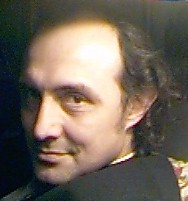
Photo of Roberto Quaglia Photo of Roberto Quaglia

If you want to contact this mutant
who changes his face in time
you know how to do it.

If you don't know it, CLICK HERE

If you still don't manage to do it, give a chance to your guru.

Last modified, October 23, 2003

© 1995-2006 by Roberto Quaglia